
Categories
SellersPublished February 17, 2026
How to Protect Your Illinois Home From Foreclosure

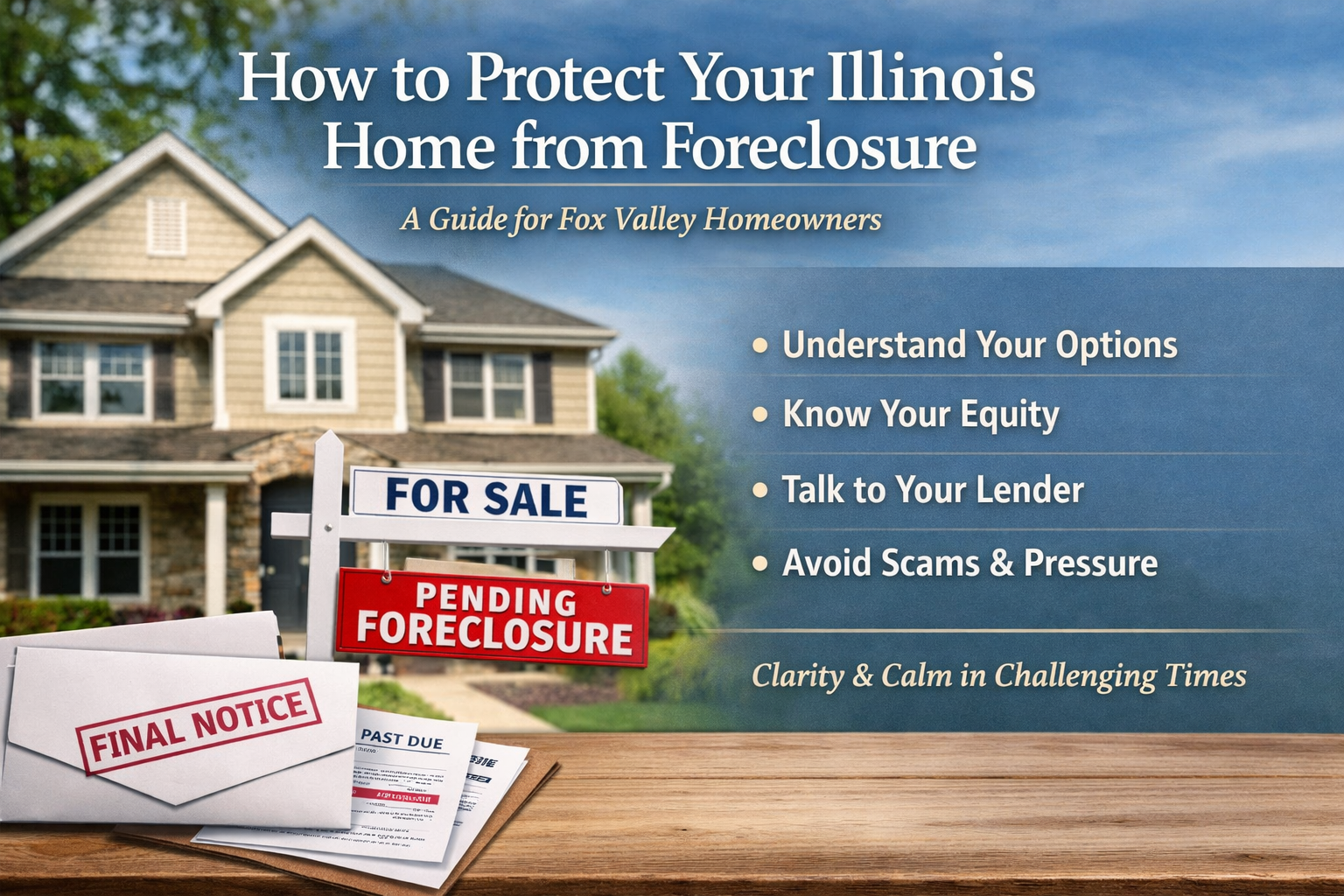
How to Protect Your Illinois Home from Foreclosure
A calm, step-by-step guide for Fox Valley homeowners who need clarity—not pressure. When you fall behind on mortgage payments, it can feel like everything moves fast and nothing makes sense. Letters show up. Calls increase. You hear words like default, notice, and foreclosure. And suddenly you’re not sure who to trust.
If you live in Geneva, Batavia, St. Charles, Aurora, Elgin, or nearby communities, here’s the most important thing to know:
You likely have more options than you think. Let’s walk through them clearly and calmly.
Why So Many Illinois Homeowners Feel Confused
Foreclosure is legal. It’s procedural. It’s full of timelines.
But when you’re living it, it feels personal.
People are often confused because:
-
Lenders don’t always explain alternatives clearly
-
Online information feels extreme or sales-driven
-
Friends and family mean well—but may not understand Illinois laws
-
Emotions (stress, shame, fear) make decision-making harder
In Illinois, foreclosure is a judicial process, which means it goes through the court system. That takes time. And time gives you options.
Understanding those options is the first step toward protecting yourself.
Step 1: Know Where You Are in the Process
There’s a big difference between:
-
Missing one or two payments
-
Receiving a Notice of Default
-
Being served with foreclosure paperwork
-
Approaching a scheduled sheriff’s sale
The earlier you act, the more flexibility you usually have.
If you’re unsure where you stand, gather:
-
Your most recent mortgage statement
-
Any letters from your lender
-
Any court documents
Clarity reduces panic. And panic leads to rushed decisions.
Step 2: Talk to Your Lender (Yes, Really)
It may feel uncomfortable, but lenders often prefer solutions over foreclosure.
You may qualify for:
Loan Modification
Adjusting your loan terms to make payments more manageable.
Repayment Plan
Spreading missed payments over time.
Forbearance
Temporary pause or reduction in payments due to hardship.
In many Fox Valley cases I’ve seen, homeowners avoided foreclosure simply by initiating communication early.
Step 3: Understand Your Equity Position
Before you assume the worst, ask:
Do you have equity in your home?
In much of the Fox River Valley, home values have remained relatively strong in recent years. Even homeowners facing hardship sometimes discover they have equity they didn’t realize.
Equity can create options like:
-
Selling traditionally and paying off the loan
-
Exploring a cash offer for speed and certainty
-
Negotiating a short sale (if equity is limited)
Knowing your numbers changes everything.
Step 4: Selling Before Foreclosure (If That’s Right for You)
Selling isn’t failure.
For some homeowners, it’s protection.
If you sell before foreclosure is finalized:
-
You protect your credit from more serious damage
-
You avoid a public auction
-
You maintain more control over timing
-
You may walk away with funds to reset your situation
In communities like Aurora and Elgin, especially, buyers are often active—meaning properly priced homes can move.
The key is realistic pricing and a smart strategy.
Step 5: Be Cautious of “Rescue” Promises
When foreclosure notices go public, solicitations increase.
You may receive:
-
Investors promising instant solutions
-
Companies offering to “save” your home
-
Buyers are pushing urgent contracts
Some are legitimate. Some are not.
Be cautious if someone:
-
Pressures you to sign immediately
-
Avoids explaining paperwork
-
Promises to stop foreclosure without specifics
-
Suggests transferring your deed without clear legal guidance
You deserve clarity. Not urgency.
Step 6: Consider Legal Guidance if Needed
Because Illinois foreclosure goes through the courts, speaking with a qualified foreclosure or bankruptcy attorney can be helpful—especially if:
-
You’ve already been served
-
There’s confusion about timelines
-
You’re considering Chapter 13
Legal advice and real estate guidance can work together. They don’t compete.
Step 7: Make a Decision Based on Stability, Not Emotion
When stress is high, people often:
-
Avoid opening mail
-
Delay conversations
-
Make rushed agreements
Instead, pause.
Ask yourself:
-
What outcome will give me stability in 6–12 months?
-
Is keeping the home financially sustainable in the long term?
-
Would a reset allow me to breathe again?
There’s no one-size-fits-all answer.
Only what’s right for you.
A Local Perspective
In the Fox Valley—Geneva, Batavia, St. Charles, Aurora, Elgin—we’ve seen cycles before.
Life events happen:
-
Job changes
-
Medical expenses
-
Divorce
-
Business downturns
Foreclosure doesn’t define your character.
It’s a financial situation that can be navigated thoughtfully.
Final Thought
If you’re behind on payments or worried about where things are heading, the most powerful move isn’t panic.
It’s information.
You deserve a calm conversation about:
-
Your home’s current value
-
Your equity position
-
Your timeline
-
Your options
No pressure. Just clarity.
If learning your numbers would help you feel more grounded, you can explore resources or start with simple information at:
https://www.foxvalleyhomesforsale.com
Even if you decide not to sell, understanding your position is empowering.
|


or another way